Kyphosis
Evaluation and treatment planning for kyphosis, an excessive forward spinal curvature that may cause posture changes, back pain, stiffness, or imbalance.

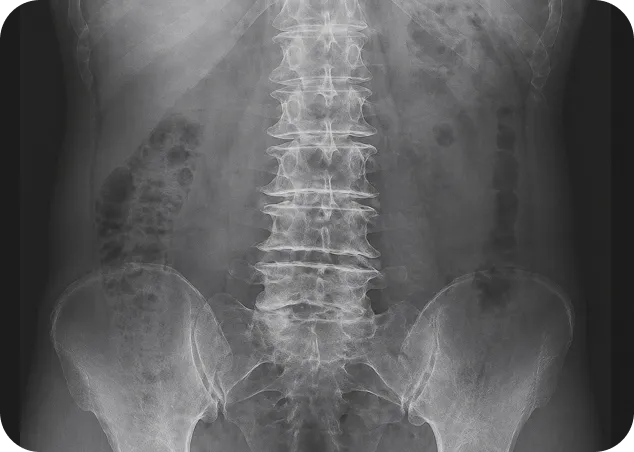
A herniated disc occurs when material inside a spinal disc pushes through a weakened or torn area of its outer layer. It may cause neck or back pain, radiating arm or leg pain, numbness, tingling, or weakness when nearby nerves are affected.
A herniated disc, also called a herniated disk, slipped disc, ruptured disc, or herniated nucleus pulposus, occurs when the inner portion of a spinal disc pushes through or out of the outer disc layer. Spinal discs sit between the vertebrae and help cushion the spine.
A herniated disc can occur in the cervical spine in the neck, the thoracic spine in the mid back, or the lumbar spine in the lower back. Some herniated discs cause no symptoms. Others may irritate or compress a nearby nerve root, causing radiculopathy, which can lead to radiating arm or leg pain, numbness, tingling, or weakness.
De Novo Brain & Spine evaluates adult patients with suspected or confirmed herniated discs when symptoms suggest nerve compression, spinal cord compression, cervical radiculopathy, lumbar radiculopathy, sciatica, spinal stenosis, or another spine-related condition that may require neurosurgical review.
Herniated disc symptoms depend on the location of the disc herniation, the size of the herniation, and whether a nerve root or the spinal cord is compressed.
Common signs and symptoms may include:
Seek urgent medical evaluation for progressive weakness, foot drop, worsening numbness, balance problems, trouble walking, loss of hand coordination, numbness in the groin or saddle area, new bowel or bladder problems, fever, unexplained weight loss, history of cancer, severe pain after trauma, or rapidly worsening neurological symptoms. Seek emergency medical care or call 911 for symptoms concerning for cauda equina syndrome, spinal cord compression, stroke, or another emergency condition.
When previous spine imaging is available, comparing it with current studies can provide additional context about disc and surrounding spinal findings over time.
Healthcare professionals interpret these images together with current symptoms, physical and neurological examination findings, and medical history. An imaging finding alone does not necessarily explain every symptom, so the overall clinical picture remains important.
A bulging disc usually involves a broader extension of the disc beyond its normal boundary. A herniated disc generally occurs when inner disc material pushes through a weakened or torn section of the outer disc layer.
Either condition may be painless or may compress a spinal nerve. Symptoms, neurological examination findings, and imaging results should be evaluated together before treatment is recommended.
A herniated disc can occur when the outer disc layer weakens or tears, allowing inner disc material to move outward. This may happen gradually from degeneration or suddenly after injury or strain.
Possible causes and related factors may include:
These causes and risk factors do not mean every patient with a herniated disc will have symptoms. Treatment planning depends on symptom severity, neurological examination, imaging findings, nerve compression, spinal cord involvement, response to prior care, and overall health.
A herniated disc is diagnosed through medical history, physical examination, neurological examination, and imaging when appropriate. Imaging findings must be compared with symptoms because some disc herniations are found incidentally and do not cause pain.
Common diagnostic steps may include:
The goal of diagnosis is to determine whether the herniated disc is actually causing symptoms, identify the affected nerve or spinal cord area, and decide whether conservative care, injections, or surgical evaluation may be appropriate.
Herniated disc treatment depends on the location of the disc herniation, severity of symptoms, neurological examination, imaging findings, spinal cord involvement, prior treatment, activity limitations, and overall health. Many patients begin with non-surgical care when there is no progressive neurological deficit, cauda equina syndrome, spinal cord compression, fracture, infection, tumor, or other urgent concern.
Treatment options may include:
Surgery is not appropriate for every herniated disc. Neurosurgical treatment may be considered when a herniated disc causes significant nerve compression, progressive weakness, spinal cord compression, cauda equina symptoms, persistent radiculopathy, or symptoms that do not improve with appropriate non-surgical care.
A herniated disc occurs when part of a spinal disc moves beyond its normal position. The condition can occur in different areas of the spine and may affect nearby structures.
A herniated disc may be associated with age-related disc changes, repetitive stress, lifting, twisting, injury, or other factors that place pressure on the spine.
Symptoms can vary depending on the location and severity of the disc problem. Some people may experience neck or back discomfort, pain that travels into an arm or leg, numbness, tingling, or weakness.
Evaluation generally includes a review of symptoms and medical history, a physical or neurological examination, and imaging studies when appropriate.
Treatment depends on the individual situation. Options may include activity modification, physical therapy, medications, injections, or surgical treatment when clinically appropriate.
Schedule a Consultation
Get an expert opinion about your condition.
Evaluation and treatment planning for spondylosis, age-related spinal arthritis that may cause neck pain, back pain, stiffness, stenosis, or nerve symptoms.
Evaluation and treatment planning for spine trauma involving spinal fractures, instability, nerve compression, spinal cord injury, or injury-related neck and back pain.