Osteoporotic Spinal Fractures
Evaluation and treatment planning for osteoporotic spinal fractures, vertebral compression fractures caused by weakened bone density and spinal bone collapse.

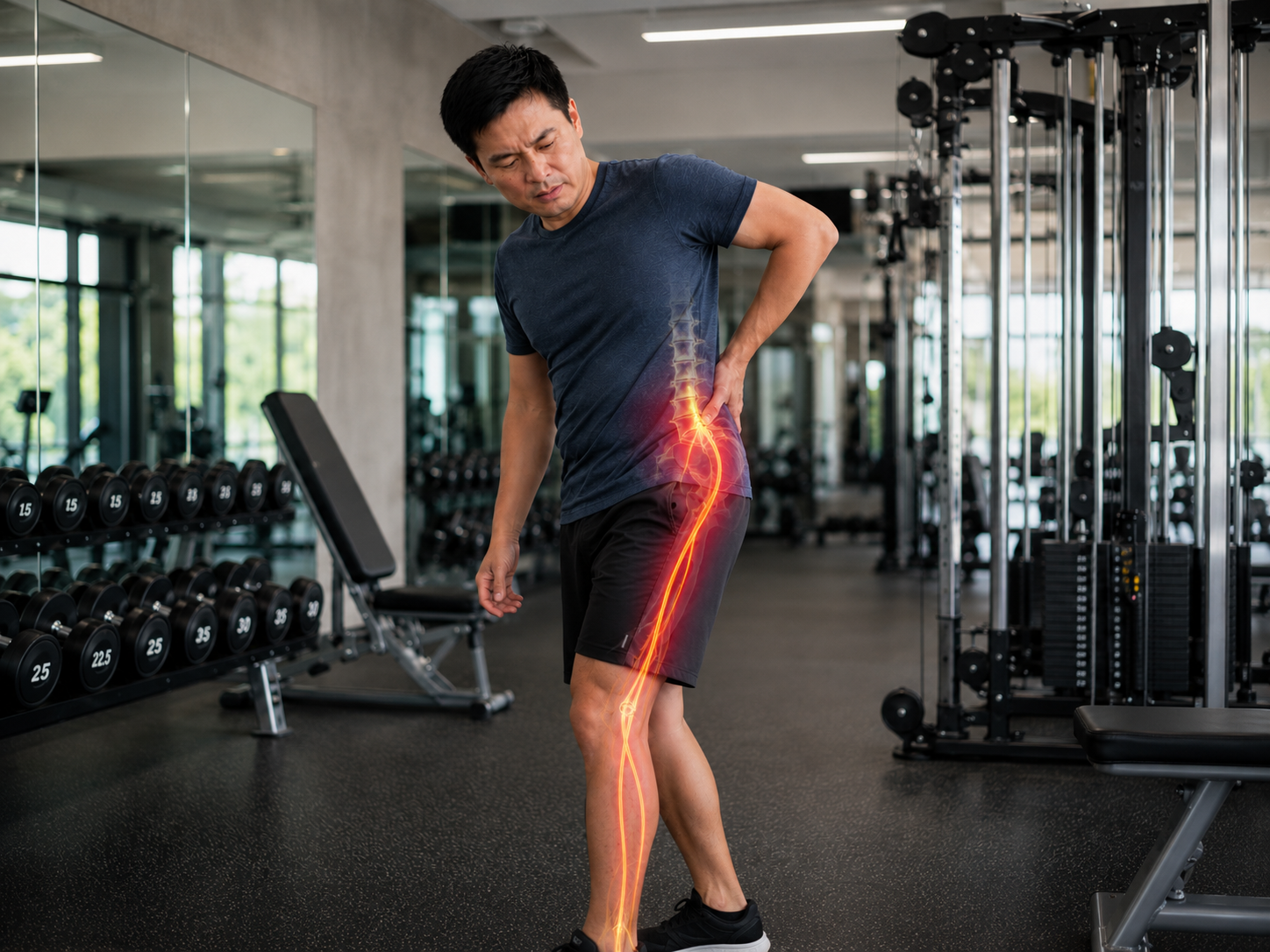
Lumbar radiculopathy occurs when a nerve root in the lower spine becomes compressed, inflamed, or irritated. It is commonly called a pinched nerve in the lower back and may cause pain, numbness, tingling, or weakness that travels into the buttock, hip, thigh, calf, ankle, or foot.
Radiating leg pain caused by lumbar nerve irritation is often described as sciatica. However, sciatica describes a pattern of symptoms, while lumbar radiculopathy identifies irritation or compression of a specific nerve root.
Common causes include lumbar disc herniation, bulging discs, spinal stenosis, foraminal narrowing, bone spurs, degenerative disc disease, spondylolisthesis, and spinal instability. The affected nerve root influences where pain, numbness, weakness, and reflex changes appear.
De Novo Brain & Spine evaluates adults with suspected lumbar radiculopathy in Stockbridge, Georgia. Evaluation may include a neurological examination, lumbar spine imaging, nerve testing when appropriate, non-surgical treatment recommendations, or surgical planning when structural nerve compression is present.
Lumbar radiculopathy is a medical diagnosis involving irritation or compression of a lumbar or sacral nerve root.
Sciatica describes pain that follows the sciatic nerve pathway, usually from the lower back or buttock into the thigh, calf, or foot. Lumbar radiculopathy is one of the most common causes of sciatica, but leg pain may also originate from the hip, sacroiliac joint, peripheral nerves, or other conditions.
A neurological examination helps determine whether leg symptoms follow a specific nerve-root pattern and whether weakness, sensory loss, or reflex changes are present.
Lumbar radiculopathy symptoms depend on which lumbar or sacral nerve root is affected and how severe the nerve irritation or compression is.
Common signs and symptoms may include:
Seek urgent medical evaluation for lumbar radiculopathy with progressive leg weakness, foot drop, numbness in the groin or saddle area, new bowel or bladder problems, fever, unexplained weight loss, history of cancer, severe pain after trauma, or rapidly worsening neurological symptoms. Seek emergency medical care or call 911 for symptoms concerning for cauda equina syndrome, including loss of bowel or bladder control, severe leg weakness, or saddle anesthesia.
Lumbar radiculopathy occurs when a nerve root in the lower spine becomes irritated, inflamed, or compressed. The cause may involve the spinal disc, joints, bones, ligaments, or nearby soft tissues.
Possible causes and related conditions may include:
These causes and risk factors do not mean every patient with back or leg pain has lumbar radiculopathy. Treatment planning depends on symptoms, neurological examination, imaging findings, response to prior care, and overall health.
Symptoms involving the nerves of the lower spine can vary from person to person. They may include pain, numbness, tingling, changes in sensation, or weakness affecting different areas of the lower body.
Because similar symptoms can also occur with other nerve, muscle, or joint conditions, determining their source usually requires considering the pattern of symptoms along with examination findings and, when appropriate, imaging or other diagnostic testing.
Lumbar radiculopathy is diagnosed through medical history, physical examination, neurological examination, and imaging or nerve testing when appropriate. The evaluation also helps distinguish lumbar radiculopathy from sciatica caused outside the spine, peroneal neuropathy, peripheral neuropathy, hip disease, sacroiliac joint pain, or other conditions.
Common diagnostic steps may include:
The goal of diagnosis is to identify the affected nerve root, determine the cause of nerve compression, and decide whether conservative care, injections, or surgical evaluation may be appropriate.
Lumbar radiculopathy treatment depends on the cause, severity, duration, neurological examination, imaging findings, prior treatment, activity limitations, and overall health. Many patients begin with non-surgical care when there is no progressive neurological deficit, cauda equina syndrome, fracture, infection, tumor, or other urgent concern.
Treatment options may include:
Surgery is not appropriate for every patient with lumbar radiculopathy. Neurosurgical treatment may be considered when symptoms are caused by structural nerve compression, progressive weakness, foot drop, spinal stenosis, herniated disc, instability, or symptoms that do not improve with appropriate non-surgical care
What does lumbar radiculopathy feel like?
It may cause sharp, burning, shooting, or electric-like pain extending from the lower back into the buttock, thigh, calf, ankle, or foot. Numbness, tingling, weakness, and reflex changes may also occur.
What causes lumbar radiculopathy?
Common causes include a herniated disc, bulging disc, spinal stenosis, foraminal narrowing, bone spurs, degenerative disc disease, spondylolisthesis, and spinal instability.
Is lumbar radiculopathy the same as sciatica?
Not exactly. Lumbar radiculopathy refers to irritation or compression of a spinal nerve root. Sciatica describes pain along the sciatic nerve pathway and is often a symptom of lumbar radiculopathy.
Can lumbar radiculopathy improve without surgery?
Many patients improve with activity modification, physical therapy, medication, and selected injections. Surgery may be considered when structural nerve compression causes persistent pain, progressive weakness, foot drop, or other significant neurological symptoms.
When is lumbar radiculopathy an emergency?
Emergency evaluation is necessary for new bowel or bladder dysfunction, saddle numbness, severe or rapidly worsening leg weakness, or symptoms suggesting cauda equina syndrome.
Schedule a Consultation
Get an expert opinion about your condition.
Evaluation and treatment planning for osteoporotic spinal fractures, vertebral compression fractures caused by weakened bone density and spinal bone collapse.
Evaluation and treatment planning for facet joint disease, a spine condition that may cause neck pain, back pain, stiffness, or referred pain.
Evaluation and treatment planning for spinal stenosis, narrowing in the spine that may compress nerves or spinal cord and cause pain or weakness.