Sprains & Strains
Evaluation and treatment planning for spine-related sprains and strains causing neck, mid back, or low back pain after injury or overuse.

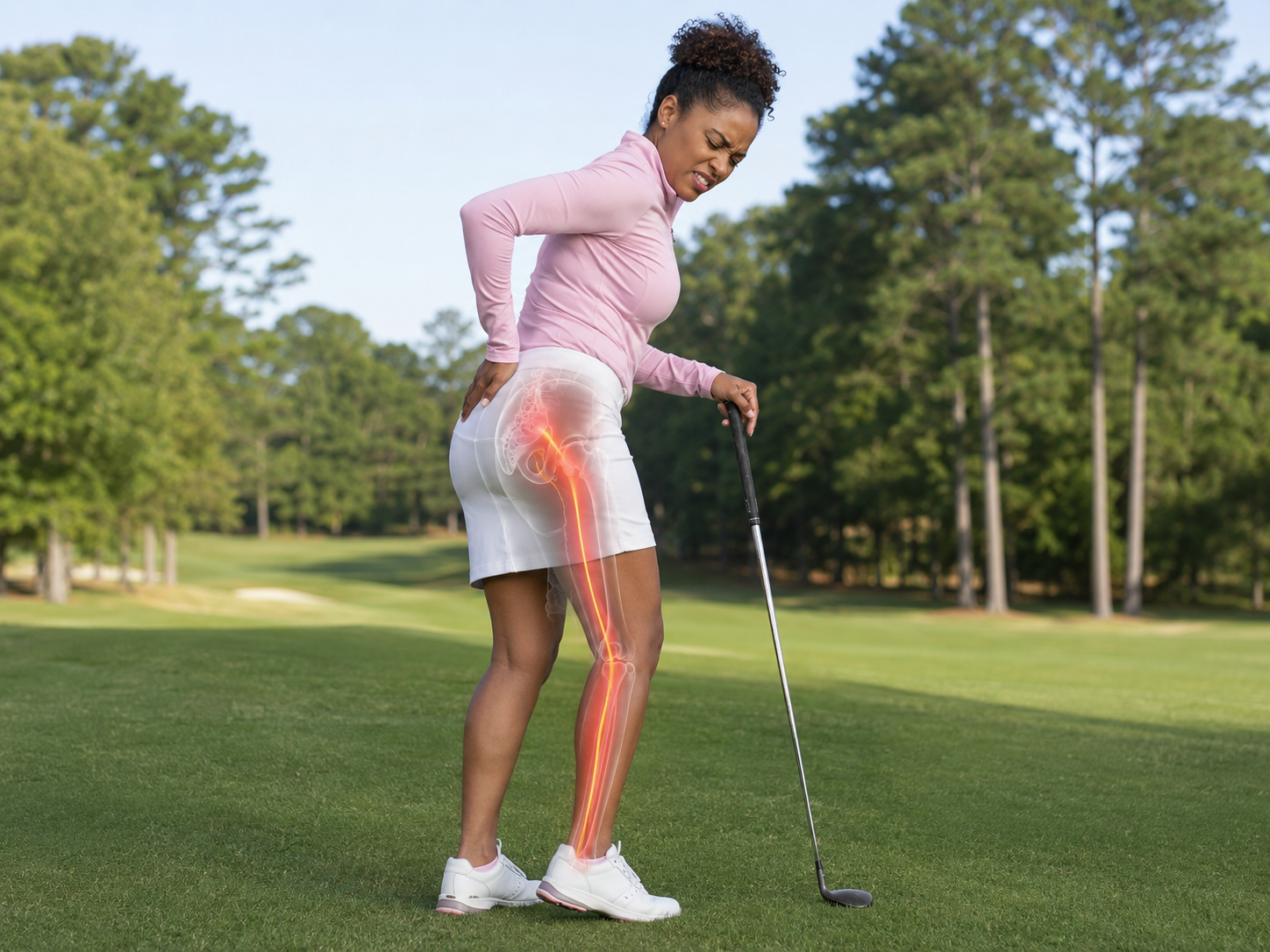
Sciatica is pain that travels along the path of the sciatic nerve, often from the lower back into the buttock, hip, thigh, calf, or foot. The term sciatica describes a symptom pattern rather than one single diagnosis.
Sciatica is commonly related to lumbar radiculopathy, which means irritation or compression of a nerve root in the lower spine. Patients may describe sciatica as sharp, burning, shooting, electric-like, or radiating leg pain. It may occur with numbness, tingling, weakness, or difficulty walking.
De Novo Brain & Spine evaluates adult patients with sciatica when symptoms suggest lumbar nerve compression, herniated disc, spinal stenosis, spondylolisthesis, spinal instability, or another spine-related condition that may require neurosurgical review.
Sciatica specifically describes pain that travels along the sciatic nerve pathway, usually from the lower back or buttock into the thigh, calf, or foot. It may occur with numbness, tingling, weakness, or foot drop.
General lower-back pain may remain limited to the lumbar area and can originate from muscles, spinal discs, facet joints, ligaments, or vertebral structures without affecting a nerve.
A patient may experience lower-back pain and sciatica at the same time, but radiating neurological symptoms make nerve-root involvement more likely.
Sciatica symptoms depend on which lumbar or sacral nerve root is affected and how severe the nerve irritation or compression is.
Common signs and symptoms may include:
Seek urgent medical evaluation for sciatica with progressive weakness, foot drop, numbness in the groin or saddle area, new bowel or bladder problems, fever, unexplained weight loss, history of cancer, severe pain after trauma, or rapidly worsening neurological symptoms. Seek emergency medical care or call 911 for symptoms concerning for cauda equina syndrome, including loss of bowel or bladder control, severe leg weakness, or saddle anesthesia.
Details about where symptoms begin, how far they travel, and whether they include numbness, tingling, or weakness can provide useful context during an evaluation.
Healthcare professionals consider the pattern of symptoms together with the physical and neurological examination and, when appropriate, imaging or other testing to better understand which nerves or spinal structures may be involved.
Sciatica occurs when the sciatic nerve pathway or the spinal nerve roots that form the sciatic nerve become irritated, inflamed, or compressed. In many patients, the problem begins in the lumbar spine.
Possible causes and related conditions may include:
These causes and risk factors do not mean every patient with sciatica has a serious spine condition. Treatment planning depends on symptoms, neurological examination, imaging findings when needed, response to prior care, and the patient’s overall health.
Sciatica is diagnosed through medical history, physical examination, neurological examination, and imaging or additional testing when appropriate. The goal is to identify whether symptoms are caused by lumbar nerve root compression, peripheral nerve irritation, or another condition.
Common diagnostic steps may include:
The goal of diagnosis is to identify the source of nerve irritation, determine whether nerve compression is present, and decide whether conservative care, injections, or surgical evaluation may be appropriate.
Sciatica treatment depends on the cause, severity, duration, neurological examination, imaging findings, prior treatment, activity limitations, and overall health. Many patients begin with non-surgical care when there is no progressive weakness, cauda equina syndrome, fracture, infection, tumor, or other urgent concern.
Treatment options may include:
Surgery is not appropriate for every patient with sciatica. Neurosurgical treatment may be considered when sciatica is caused by structural nerve compression, progressive weakness, foot drop, spinal stenosis, herniated disc, instability, or symptoms that do not improve with appropriate non-surgical care.
Many cases of sciatica improve within several weeks with activity changes, physical therapy, and medication. If leg pain isn’t improving in that time, keeps getting worse, or comes with new numbness or weakness, that’s a reason to move up to a specialist evaluation rather than continuing the same home routine. Sudden red-flag symptoms should be evaluated right away, without waiting.
Not exactly. Sciatica describes a pattern of pain traveling along the sciatic nerve, usually from the lower back into the leg. A herniated disc is one possible cause of that pattern, but sciatica can also come from spinal stenosis, spondylolisthesis, or other sources of nerve irritation. Identifying the underlying cause is part of what an evaluation is for.
No. Most people with sciatica improve with non-surgical care such as physical therapy, activity modification, and medication. Surgery is typically considered when there’s confirmed nerve compression causing persistent or progressive symptoms that haven’t responded to conservative treatment, not simply because leg pain has lasted a while.
Foot drop means difficulty lifting the front of the foot, which can cause the foot to catch or drag while walking. With sciatica, it can be a sign of more significant nerve compression and is generally treated as a reason for prompt evaluation rather than a symptom to wait out.
Sciatica becomes an emergency when it comes with loss of bowel or bladder control, numbness in the groin or saddle area, or severe leg weakness. These can be signs of cauda equina syndrome, which needs immediate emergency care, not a scheduled appointment.
Schedule a Consultation
Get an expert opinion about your condition.
Evaluation and treatment planning for spine-related sprains and strains causing neck, mid back, or low back pain after injury or overuse.
Evaluation and treatment planning for osteoporotic spinal fractures, vertebral compression fractures caused by weakened bone density and spinal bone collapse.
Evaluation and treatment planning for spinal stenosis, narrowing in the spine that may compress nerves or spinal cord and cause pain or weakness.