Anterior Lumbar Interbody Fusion
Anterior lumbar interbody fusion (ALIF) is a lower-back fusion surgery that may help selected patients with painful instability or disc collapse.

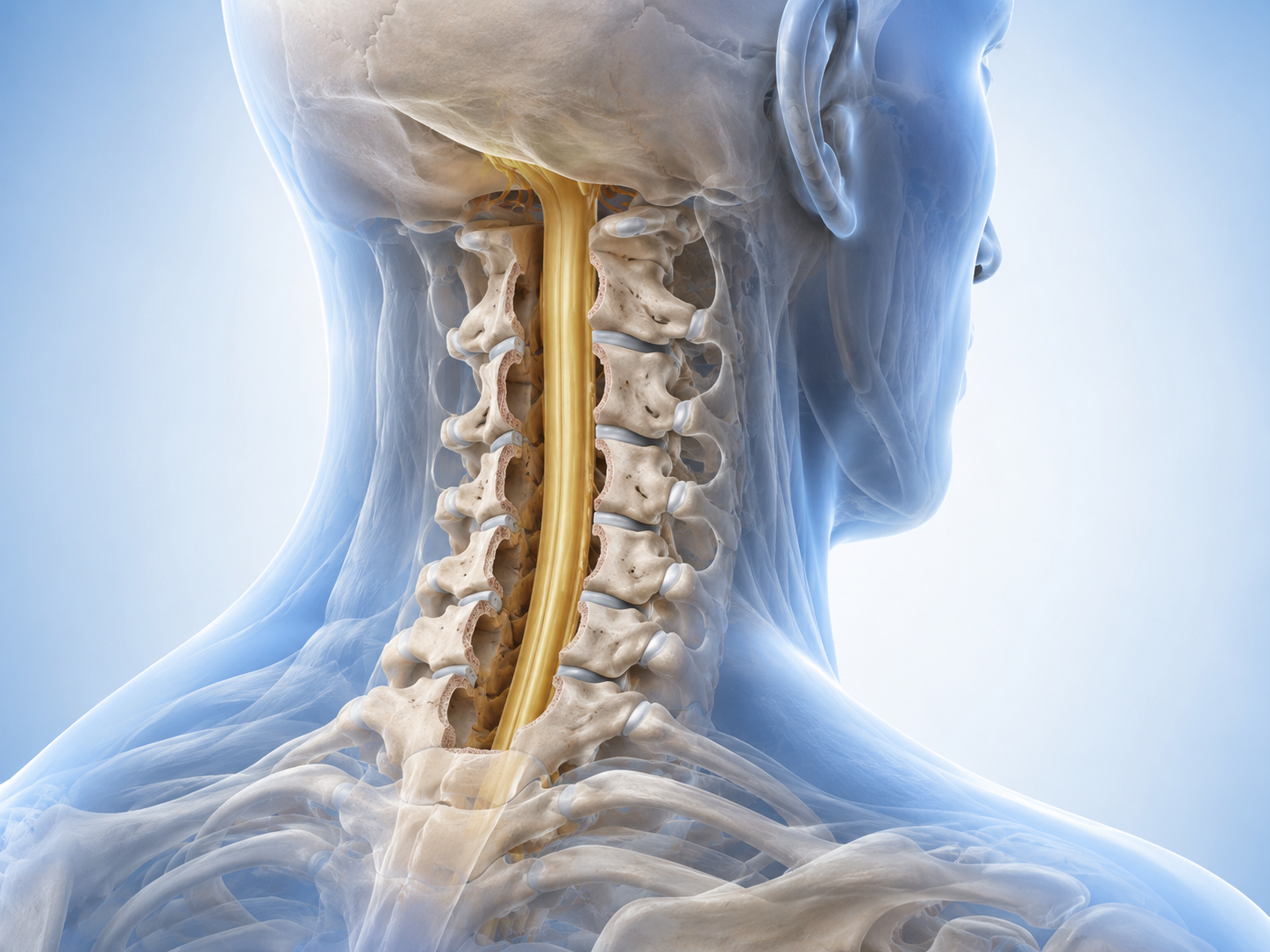
Cervical laminectomy is a neck surgery that removes part of the lamina, which is the bony arch at the back of a vertebra. The cervical spine is the part of the spine in the neck. A laminectomy creates more space for the spinal cord or nerve roots when they are compressed.
This procedure is usually performed from the back of the neck. It may be used when narrowing of the spinal canal, bone spurs, thickened ligaments, arthritis, or other structural changes are pressing on the spinal cord or nerves.
Cervical laminectomy is not the right treatment for every patient with neck pain. De Novo Brain & Spine evaluates adult patients in Stockbridge, Fayetteville, Atlanta, and surrounding communities to help determine whether cervical laminectomy, another surgical option, or non-surgical care may be appropriate.
Cervical laminectomy may be considered when the spinal cord or nerve roots need more space in the cervical spine. It is most often discussed when compression is coming from the back of the spinal canal or when several cervical levels are involved.
Conditions that may lead to consideration of cervical laminectomy include:
Cervical laminectomy does not treat every cause of neck pain, arm pain, numbness, or weakness. The treatment decision depends on the exact location and cause of compression.
Cervical laminectomy may be considered when the spinal canal in the neck becomes too narrow and compresses the spinal cord. This can cause cervical myelopathy, which may affect walking, balance, hand coordination, strength, reflexes, and sensation.
Symptoms that may lead to evaluation include trouble walking, balance changes, hand clumsiness, dropping objects, numbness or tingling in the arms or hands, weakness, stiffness, or changes in coordination. Some patients also have neck pain or pain that travels into the shoulder, arm, or hand.
In some cases, cervical laminectomy may be considered after non-surgical care has not helped enough. In other cases, especially when there are signs of spinal cord compression or worsening neurologic function, surgical evaluation may be more time-sensitive.
The decision depends on whether the patient’s symptoms, physical examination, and imaging findings all point to a surgically treatable problem.
Doctors determine whether cervical laminectomy may be appropriate by comparing the patient’s symptoms, neurologic examination, imaging studies, spinal alignment, and overall health.
Evaluation may include:
Spinal alignment is especially important. In some patients, removing the lamina alone may not provide enough stability or may not be the best approach if the neck alignment is not favorable.
Cervical laminectomy is usually performed through an incision on the back of the neck. The surgeon removes part of the lamina to make more room around the spinal cord or nerve roots.
Depending on the diagnosis, the surgeon may also remove thickened ligament, bone spurs, or other tissue contributing to compression. The exact amount of decompression depends on the number of levels involved and the patient’s anatomy.
In some cases, cervical laminectomy is performed with posterior cervical fusion. Fusion may be added when there is instability, deformity, significant arthritis, abnormal alignment, or concern that decompression alone would not provide enough support. The decision to include fusion is individualized.
The main goal of cervical laminectomy is to decompress the spinal cord or nerve roots by creating more space in the cervical spinal canal.
Potential benefits may include reducing pressure on the spinal cord, helping prevent further neurologic decline, and improving selected symptoms related to compression. Improvement is not guaranteed, and recovery of nerve or spinal cord function can vary.
Cervical laminectomy has important limitations. It does not treat every cause of neck pain. It does not reverse all spinal cord or nerve injury. It may not be the best option if compression is mainly from the front of the spine, if alignment is unfavorable, or if instability requires another approach.
General risks may include infection, bleeding, nerve injury, spinal cord injury, persistent symptoms, worsening pain, spinal fluid leak, instability, alignment changes, or need for additional surgery. If fusion is performed, there are additional considerations related to hardware, bone healing, and reduced motion at the fused levels.
Treatment planning is individualized. Cervical laminectomy is one option among several possible treatments for cervical spinal cord or nerve compression.
Non-surgical options may include observation, medication, physical therapy, activity modification, and injections in selected patients. These options may be reasonable when symptoms are mild, stable, and there is no concerning spinal cord compression.
Other surgical options may include anterior cervical discectomy and fusion, cervical disc replacement, cervical corpectomy, cervical laminoplasty, posterior cervical foraminotomy, or posterior cervical fusion. These procedures are not interchangeable.
The best option depends on where the compression is located, how many levels are involved, whether the spinal cord or nerve roots are affected, the patient’s alignment, the presence of instability, bone quality, medical risks, and the patient’s goals.
Recovery after cervical laminectomy varies from person to person. It depends on the reason for surgery, the number of levels treated, whether fusion is performed, the patient’s neurologic status before surgery, and overall health.
Follow-up usually focuses on incision healing, pain control, walking and balance, strength, sensation, coordination, activity progression, and imaging when needed. Some patients may need physical therapy or rehabilitation guidance after surgery.
Symptoms caused by spinal cord or nerve compression may improve gradually, but some symptoms may persist if the spinal cord or nerve was significantly compressed before treatment.
Seek emergency medical care or call 911 for sudden or worsening weakness, difficulty walking, loss of balance, loss of bowel or bladder control, or rapidly worsening numbness.
Urgent evaluation is also important for severe neck pain after trauma, fever with severe neck pain, new hand clumsiness, worsening coordination, or symptoms that suggest spinal cord compression.
Patients with persistent neck pain, arm pain, numbness, tingling, weakness, balance difficulty, or hand coordination problems should seek medical evaluation, especially when symptoms interfere with daily function or continue despite conservative care.
Cervical laminectomy may be used to relieve pressure on the spinal cord or nerve roots in the neck. It is often considered for selected patients with cervical spinal stenosis, cervical myelopathy, or multilevel compression.
No. Cervical laminectomy removes part of the bony arch to create more space for the spinal cord or nerves. Cervical fusion joins vertebrae together to stabilize the spine. Sometimes these procedures are performed together.
No. Some patients may have decompression alone, while others may need fusion for stability, alignment, or multilevel disease. The decision depends on the patient’s anatomy, spinal alignment, instability, diagnosis, and surgical goals.
Cervical laminectomy is usually performed from the back of the neck and removes bone to decompress the spinal canal. ACDF is performed from the front of the neck and removes a damaged disc before fusing the treated level. The best approach depends on where the compression is located.
Seek urgent medical care for new or worsening weakness, trouble walking, loss of balance, loss of bowel or bladder control, severe neck pain after trauma, or rapidly worsening numbness. These symptoms may suggest spinal cord involvement.
Schedule a Consultation
Learn if this procedure is right for you.
Anterior lumbar interbody fusion (ALIF) is a lower-back fusion surgery that may help selected patients with painful instability or disc collapse.
Anterior cervical discectomy and fusion (ACDF) is neck surgery that may relieve cervical nerve or spinal cord pressure in selected patients.
Cervical disc replacement is neck surgery that may relieve nerve or spinal cord pressure while preserving motion at the treated level.