Craniotomy For Brain Tumor Resection
Craniotomy for brain tumor resection is brain surgery to remove as much tumor as safely appropriate for diagnosis or treatment.

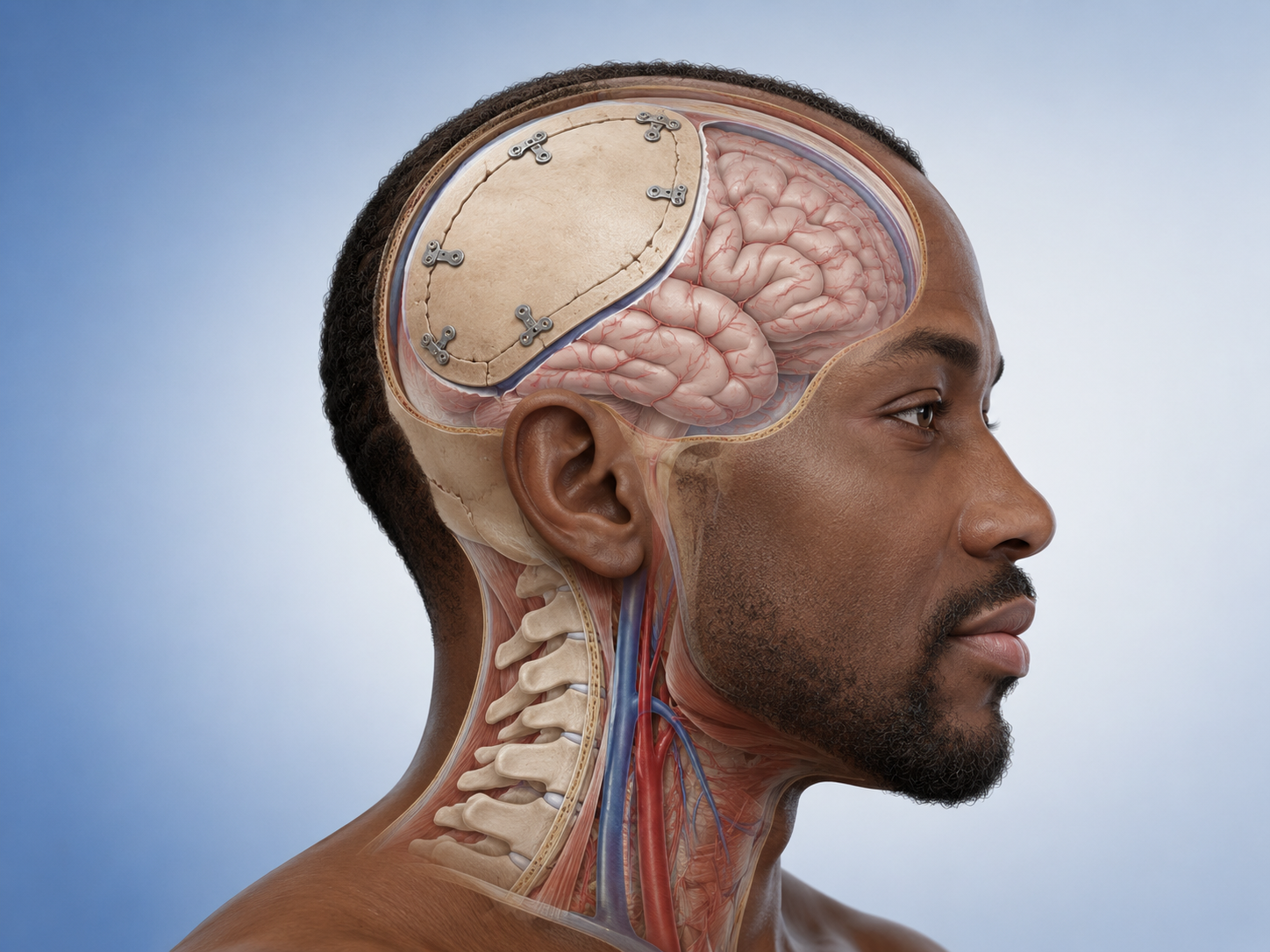
Craniotomy for hematoma evacuation is brain surgery that creates a temporary opening in the skull so a neurosurgeon can remove a blood clot. A hematoma is a collection of blood. In the brain or around the brain, a hematoma can press on brain tissue and raise pressure inside the skull. In selected cases, computer-assisted navigation may support surgical planning and localization when anatomy, bleeding location, or prior imaging needs careful review.
This procedure may be performed for certain epidural hematomas, subdural hematomas, intracerebral hemorrhages, traumatic contusions, or other blood collections depending on the location, size, cause, and effect on the brain. Some hematomas are traumatic, meaning they happen after head injury. Others may occur from stroke, blood vessel disease, blood thinners, tumor bleeding, or other medical causes.
Craniotomy for hematoma evacuation is often urgent or emergency surgery. De Novo Brain & Spine evaluates adult patients in Stockbridge, Fayetteville, Atlanta, and surrounding communities, but suspected brain bleeding or rapid neurologic change should be treated as an emergency, not as a routine office appointment.
Craniotomy for hematoma evacuation may be considered when a blood clot in or around the brain is large enough, dangerous enough, or symptomatic enough to require surgical removal. It is not needed for every brain bleed.
Conditions or situations that may lead to consideration of craniotomy for hematoma evacuation include:
The treatment decision depends on the type of bleeding, the patient’s neurologic status, imaging findings, medical condition, and whether surgery is likely to reduce dangerous pressure or prevent further decline.
Craniotomy for hematoma evacuation may be considered when a hematoma is compressing the brain, causing swelling, shifting brain structures, increasing intracranial pressure, or causing neurologic decline. AANS notes that surgery may be performed for a large hematoma or contusion that significantly compresses the brain or raises pressure inside the skull.
Symptoms that may lead to emergency evaluation include worsening headache, confusion, sleepiness, vomiting, seizure, weakness, trouble speaking, unequal pupils, loss of consciousness, or worsening symptoms after a head injury. In some patients, symptoms can worsen quickly.
The timing and type of surgery depend on the specific hematoma. Some acute epidural or subdural hematomas require rapid evacuation. Some chronic subdural hematomas may be treated with burr holes rather than craniotomy. Some intracerebral hemorrhages are managed medically, while selected cases may require surgical evacuation, minimally invasive evacuation, external ventricular drainage, or decompression depending on the location and clinical situation.
This decision is highly individualized and often made in the emergency department, hospital, or intensive care setting.
Doctors determine whether craniotomy for hematoma evacuation may be appropriate by reviewing the patient’s symptoms, neurologic examination, imaging, cause of bleeding, and overall medical condition.
Evaluation may include:
The decision is not based on the word “hematoma” alone. Doctors consider where the blood is, how much pressure it is causing, whether symptoms are worsening, and whether surgery is likely to help more than it harms.
Craniotomy for hematoma evacuation is performed under anesthesia. The surgeon makes an incision in the scalp and temporarily removes a section of skull bone to reach the blood clot.
The dura, which is the protective covering of the brain, may be opened depending on the type and location of the hematoma. The surgeon removes the clot, controls bleeding when possible, and reduces pressure on the brain.
The bone flap may be replaced and secured at the end of surgery. In some cases, if the brain is very swollen, the bone may be left off temporarily in a procedure called decompressive craniectomy. The exact plan depends on the patient’s condition, swelling, bleeding source, and surgeon judgment.
A drain may be placed in some cases. After surgery, patients are usually monitored closely in the hospital or intensive care unit.
The main goals of craniotomy for hematoma evacuation are to remove a dangerous blood clot, reduce pressure on the brain, control bleeding when possible, and help prevent further brain injury.
Potential benefits may include reduced mass effect, lower intracranial pressure, improved brain decompression, and treatment of a life-threatening blood collection. Improvement is not guaranteed, and neurologic recovery depends on the severity of the initial brain injury, bleeding location, time course, swelling, age, medical condition, and other injuries.
Craniotomy for hematoma evacuation has important limitations. It does not reverse all brain injury. It does not guarantee survival, neurologic recovery, speech recovery, strength recovery, seizure control, or return to prior function. In spontaneous intracerebral hemorrhage, AHA/ASA guidance emphasizes that the role and expected benefit of surgical evacuation depends heavily on hemorrhage location, size, neurologic status, and clinical context.
General risks may include infection, bleeding, recurrent hematoma, brain swelling, seizure, stroke, spinal fluid leak, weakness, numbness, speech difficulty, memory or thinking changes, coma, blood clots, wound problems, need for additional surgery, or death. Risks depend on the patient’s condition before surgery and the cause of the bleeding.
Treatment planning depends on the type of hematoma and the patient’s condition. Craniotomy is one possible approach, but it is not the right treatment for every brain bleed.
Other options may include:
These options are not interchangeable. The best plan depends on the hematoma type, size, location, neurologic examination, imaging findings, cause of bleeding, medical risks, and goals of care.
Recovery after craniotomy for hematoma evacuation varies widely. It depends on the cause of bleeding, the severity of brain injury, the patient’s neurologic status before surgery, the amount of swelling, age, medical condition, and whether other injuries or illnesses are present.
Follow-up usually focuses on neurologic function, wound healing, repeat imaging, seizure monitoring, medication management, blood pressure control when relevant, and rehabilitation needs. Some patients may need physical therapy, occupational therapy, speech therapy, neurocritical care follow-up, neurology care, or additional neurosurgical treatment.
Some symptoms may improve after pressure is relieved, while others may persist because of the original brain injury or stroke. Recovery can be uncertain, and the care plan may change as the patient’s neurologic condition evolves.
Seek emergency medical care or call 911 for sudden severe headache, head injury with worsening symptoms, loss of consciousness, new seizure, repeated vomiting, confusion, severe sleepiness, weakness, numbness, trouble speaking, vision changes, unequal pupils, or rapid neurologic decline.
Patients taking blood thinners who hit their head should seek medical advice promptly, especially if they develop headache, confusion, vomiting, weakness, or unusual sleepiness.
After hematoma evacuation, urgent evaluation is important for fever, worsening incision redness or drainage, severe headache, new seizure, worsening confusion, new weakness, speech difficulty, fluid leakage from the incision, or any neurologic symptom that is new or rapidly worsening.
Craniotomy for hematoma evacuation is used to remove a blood clot in or around the brain when the clot is causing dangerous pressure, brain compression, neurologic decline, or other serious risk.
No. Some hematomas are monitored with repeat imaging and medical care. Some chronic subdural hematomas may be treated with burr-hole drainage. Some hemorrhages are treated with intensive medical management, minimally invasive evacuation, external drainage, or other approaches.
Surgery may be considered for selected epidural hematomas, subdural hematomas, intracerebral hemorrhages, traumatic contusions, or cerebellar hemorrhages. The decision depends on location, size, brain compression, neurologic status, and the cause of bleeding.
No. In a craniotomy, the skull bone flap is usually replaced at the end of surgery. In a craniectomy, the bone is left off temporarily, often because the brain is too swollen and needs more room.
Call 911 for sudden severe headache, new seizure, loss of consciousness, worsening confusion, weakness, trouble speaking, repeated vomiting after head injury, unequal pupils, or rapid neurologic decline. These symptoms may suggest serious brain bleeding or pressure.
Schedule a Consultation
Learn if this procedure is right for you.
Craniotomy for brain tumor resection is brain surgery to remove as much tumor as safely appropriate for diagnosis or treatment.
Image guided brain surgery uses patient imaging and navigation technology to help surgeons plan and localize selected brain procedures.
Hematoma evacuation removes selected blood collections in or around the brain when bleeding causes pressure, neurologic symptoms, or urgent risk.