Hemifacial Spasm
Evaluation and treatment planning for hemifacial spasm, a facial nerve disorder causing involuntary twitching or contractions on one side of the face.

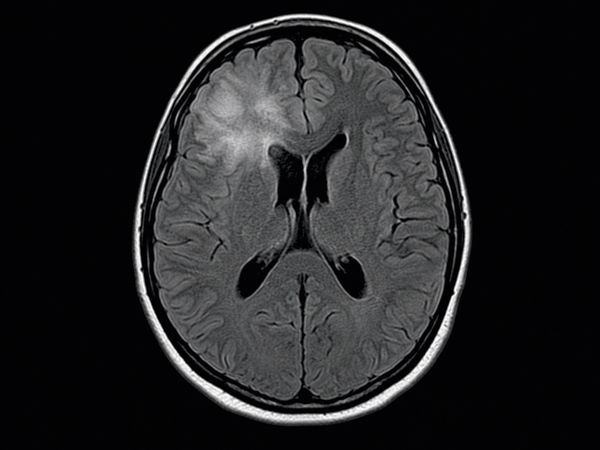
Oligodendroglioma is a type of glioma, which means it is a tumor that begins from glial cells in the brain or spinal cord. Oligodendrogliomas most often occur in the brain and may affect nearby areas that control movement, speech, memory, sensation, vision, mood, or behavior.
In current medical classification, oligodendroglioma is defined by specific molecular findings: an IDH mutation and 1p/19q codeletion. This means that diagnosis depends not only on what the tumor looks like under the microscope, but also on molecular testing. Oligodendrogliomas are generally classified as CNS WHO grade 2 or CNS WHO grade 3 tumors.
De Novo Brain & Spine evaluates adult patients with suspected or confirmed oligodendroglioma to help determine the appropriate next step. Evaluation may include neurological examination, brain MRI, CT imaging, biopsy, image-guided tumor resection, pathology review, molecular testing, or coordination with neuro-oncology and radiation oncology when needed.
Oligodendroglioma symptoms depend on the tumor’s location, size, grade, growth pattern, and swelling around the tumor. Some symptoms develop gradually, while others may appear suddenly.
Common signs and symptoms may include:
Seek emergency medical care or call 911 for a first-time seizure, sudden weakness, sudden speech difficulty, sudden vision loss, severe confusion, loss of consciousness, or a rapidly worsening headache with vomiting or neurological changes.
Most oligodendrogliomas develop without a clearly known cause. A diagnosis of oligodendroglioma does not usually mean that the patient did something to cause the tumor.
Possible risk factors and related medical factors may include:
Doctors use molecular and genetic tumor features to classify oligodendroglioma and guide treatment planning. Key diagnostic features include an IDH mutation and 1p/19q codeletion. Other tumor markers may be reviewed by the care team when appropriate.
These molecular findings are not lifestyle causes. They are tumor features that help confirm the diagnosis, determine tumor classification, and guide treatment decisions.
Oligodendroglioma cannot be diagnosed by symptoms alone. Diagnosis usually requires medical history, neurological examination, brain imaging, tissue diagnosis, and molecular testing.
Common diagnostic steps may include:
The goal of diagnosis is to confirm the tumor type, understand how the oligodendroglioma is affecting the brain, and determine whether observation, surgery, radiation therapy, chemotherapy, or additional specialty care may be needed.
Oligodendroglioma treatment depends on the tumor’s grade, molecular features, size, location, symptoms, imaging findings, neurological examination, surgical risk, and the patient’s overall health. Not every oligodendroglioma requires the same treatment plan.
Treatment options may include:
Surgery may be considered when it can help confirm the diagnosis, reduce tumor burden, relieve pressure on the brain, reduce symptoms, or support the next stage of treatment. The safest plan depends on the oligodendroglioma’s location, grade, molecular findings, and relationship to important brain structures.
An oligodendroglioma is a type of brain tumor that develops from glial cells. It is classified based on specific cellular and molecular features.
The exact cause of most oligodendrogliomas is not known. Certain genetic and molecular changes within tumor cells are involved in how these tumors are classified.
Symptoms can vary depending on the tumor’s size, location, and characteristics. Some people may experience headaches, seizures, changes in movement or sensation, or other neurological symptoms.
Evaluation may include a medical and neurological examination, imaging studies such as MRI, and additional testing when appropriate.
Treatment depends on factors such as the tumor’s grade, location, size, symptoms, and other clinical findings. Options may include monitoring, surgery, radiation therapy, medication, or other forms of care when appropriate.
Schedule a Consultation
Get an expert opinion about your condition.
Evaluation and treatment planning for hemifacial spasm, a facial nerve disorder causing involuntary twitching or contractions on one side of the face.
Evaluation and treatment planning for hydrocephalus, a cerebrospinal fluid buildup that may cause headaches, walking problems, cognitive changes, or urgent symptoms.