Stroke
Evaluation and treatment planning for stroke, including ischemic and hemorrhagic stroke, urgent symptoms, vascular causes, and neurosurgical considerations.

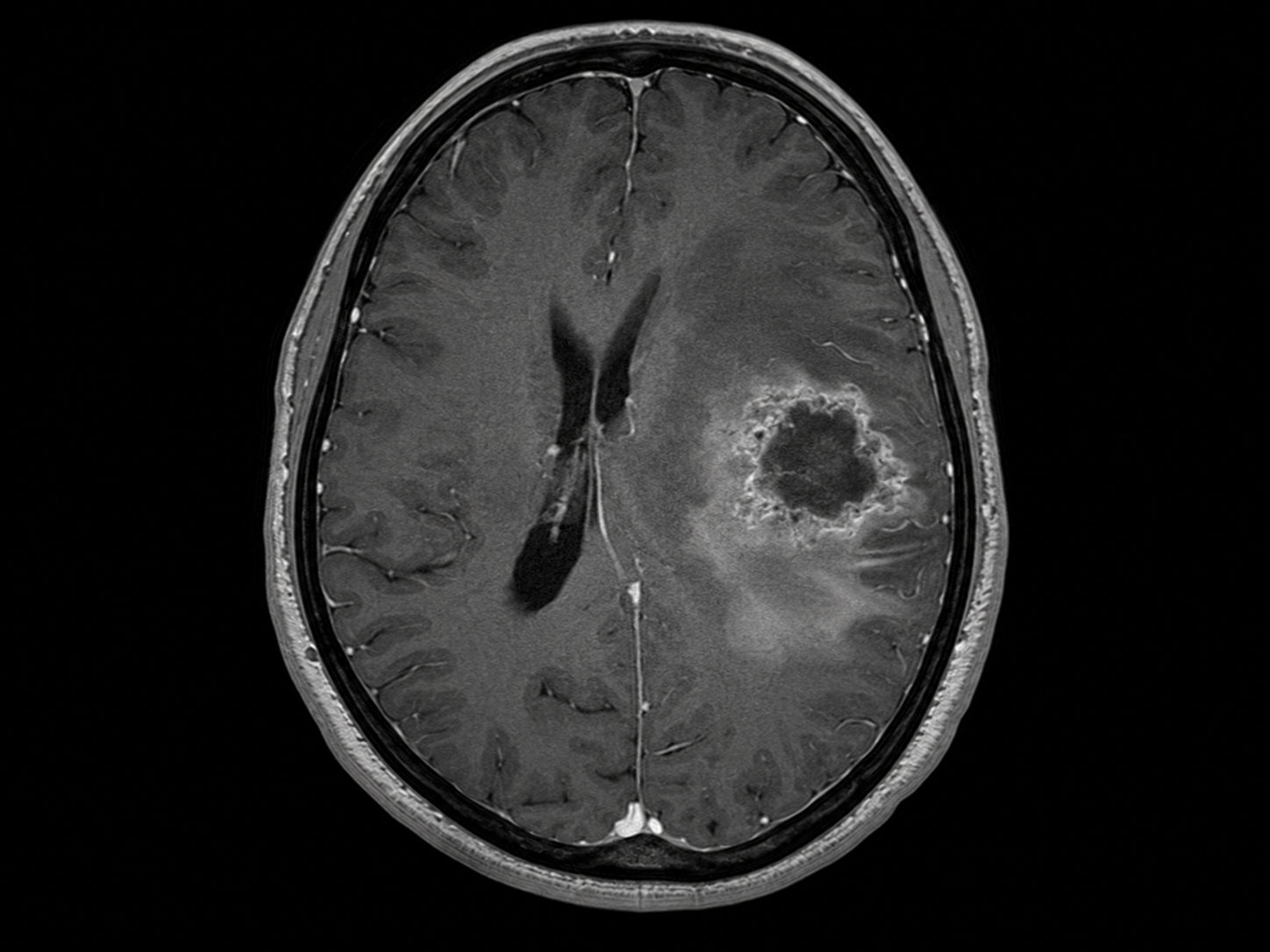
Brain tumors are abnormal growths of cells in or near the brain. They may be benign, meaning noncancerous, or malignant, meaning cancerous. Some brain tumors begin in the brain, called primary brain tumors, while others spread to the brain from cancer elsewhere in the body, called metastatic brain tumors.
Brain tumors can affect brain function by pressing on nearby tissue, causing swelling, blocking the flow of cerebrospinal fluid, or interfering with areas that control speech, movement, vision, memory, balance, mood, or behavior. The seriousness of a brain tumor depends on the tumor type, size, location, growth pattern, grade, molecular features, and the patient’s symptoms and overall health.
De Novo Brain & Spine evaluates adult patients with suspected or confirmed brain tumors to help determine the next appropriate step. Evaluation may include neurological examination, brain MRI, CT imaging, biopsy, surgical consultation, or coordination with oncology, radiation oncology, neurology, or other specialists when needed.
Brain tumor symptoms vary depending on the tumor’s size, location, growth rate, and effect on surrounding brain tissue. Some brain tumors are found after symptoms develop, while others are found incidentally during imaging for another reason.
Common signs and symptoms may include:
Seek emergency medical care or call 911 for a first-time seizure, sudden weakness, sudden speech difficulty, severe confusion, loss of consciousness, or a rapidly worsening headache with vomiting or neurological changes.
Many brain tumors develop without a clearly known cause. A brain tumor diagnosis does not usually mean that the patient did something to cause it.
Brain tumors may be related to several different medical situations, including:
Doctors may use the tumor’s location, imaging pattern, pathology, grade, and molecular markers to better understand the diagnosis. These details help guide treatment recommendations.
Brain tumors cannot be diagnosed by symptoms alone. Evaluation usually begins with a medical history, neurological examination, and brain imaging.
Common diagnostic steps may include:
The goal of diagnosis is to identify the tumor type, understand how it is affecting the brain, and determine whether observation, surgery, radiation, chemotherapy, medication, or additional specialty care may be needed.
The term brain tumor includes many different conditions. Identifying the specific tumor type can provide healthcare professionals with more detailed information about its characteristics and how it may behave.
Imaging can provide important clues, while pathology and other laboratory testing may provide additional information when tissue is available. These findings are considered together with the tumor’s location, symptoms, and individual medical history.
Brain tumor treatment depends on the tumor type, location, size, growth pattern, symptoms, imaging findings, pathology, molecular features, neurological examination, and the patient’s overall health. Not every brain tumor requires surgery right away.
Treatment options may include:
Surgery is considered when it may help confirm the diagnosis, remove tumor, relieve pressure on the brain, reduce symptoms, or support the next stage of treatment. The safest plan depends on the tumor’s relationship to important brain structures and the patient’s individual condition.
No. Brain tumors can be benign, meaning noncancerous, or malignant, meaning cancerous. A benign tumor can still cause symptoms or require treatment if it presses on nearby brain tissue or blocks the flow of cerebrospinal fluid, even though it isn’t cancer. The tumor type, not just whether it’s benign or malignant, guides the treatment plan.
Not always. Some brain tumors are small, slow-growing, or found incidentally during imaging for an unrelated reason, and these may be monitored with observation and repeat imaging rather than immediate treatment. Others need more prompt evaluation depending on size, location, and symptoms. This is determined case by case.
Brain imaging, usually an MRI, is typically the first step in identifying a suspected brain tumor. Confirming the exact tumor type often requires tissue, obtained either through a biopsy or during surgical removal, which is then reviewed by pathology. This tissue review helps guide what treatment options may be appropriate.
Yes. A second opinion can help confirm a diagnosis, review imaging findings, or discuss treatment options before moving forward with a treatment plan. Many patients find this a helpful step after a new brain tumor finding.
Schedule a Consultation
Get an expert opinion about your condition.
Evaluation and treatment planning for facial pain related to cranial nerve irritation, trigeminal neuralgia, nerve injury, tumors, or other neurological causes.
Astrocytoma is a glioma brain tumor that may require MRI diagnosis, biopsy, surgery, radiation therapy, chemotherapy, or monitoring.